
Belgium’s Quarter-Final Exit
Belgium exited the World Cup quarter-finals following a defeat to Spain, a match marked by several key player injuries. The team, managed by Rudi Garcia, had navigated a challenging group stage to reach this point.
Prior to the match, Belgium faced significant squad challenges. Amadou Onana was unable to play, arriving at the stadium on crutches after sustaining an injury in the last-16 victory against the USA. Zeno Debast was also not included, with disagreements between Belgium and Sporting regarding his fitness. Minutes before kick-off, captain Youri Tielemans was withdrawn from the starting lineup due to an injury suffered during the warm-up, reportedly a suspected hamstring issue. He was replaced by Hans Vanaken.
Match Action and Injuries
The match saw Jérémy Doku return to the lineup, showing more dynamism than in previous group stage appearances. He found space against Pedro Porro and Lamine Yamal, creating attacking opportunities. However, Spain capitalised on a moment when Doku was a step behind Porro, leading to Fábian Ruiz scoring after a cross.
Belgium responded with resolve. Charles De Ketelaere, who had scored twice in the last 16, equalised in the 39th minute. After an attempt to set up a throw-in, the ball returned to Belgium‘s right flank. Kevin De Bruyne passed to Timothy Castagne, who crossed to a diving De Ketelaere. He headed home the equaliser, marking his side’s first shot on target.
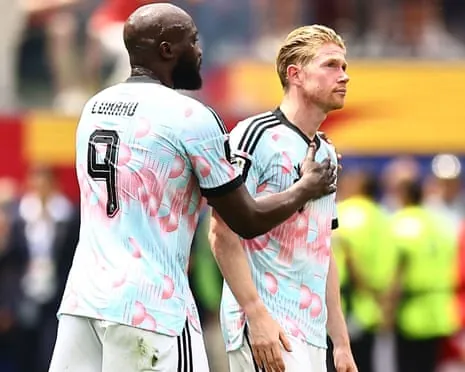
Despite Spain‘s attempts to re-establish dominance, Belgium found success through Doku‘s dribbling, which created space for Maxim De Cuyper and other midfielders. Belgium nearly scored a second goal when Doku and De Bruyne combined, but a deflected attempt fell to De Cuyper, who could not convert.
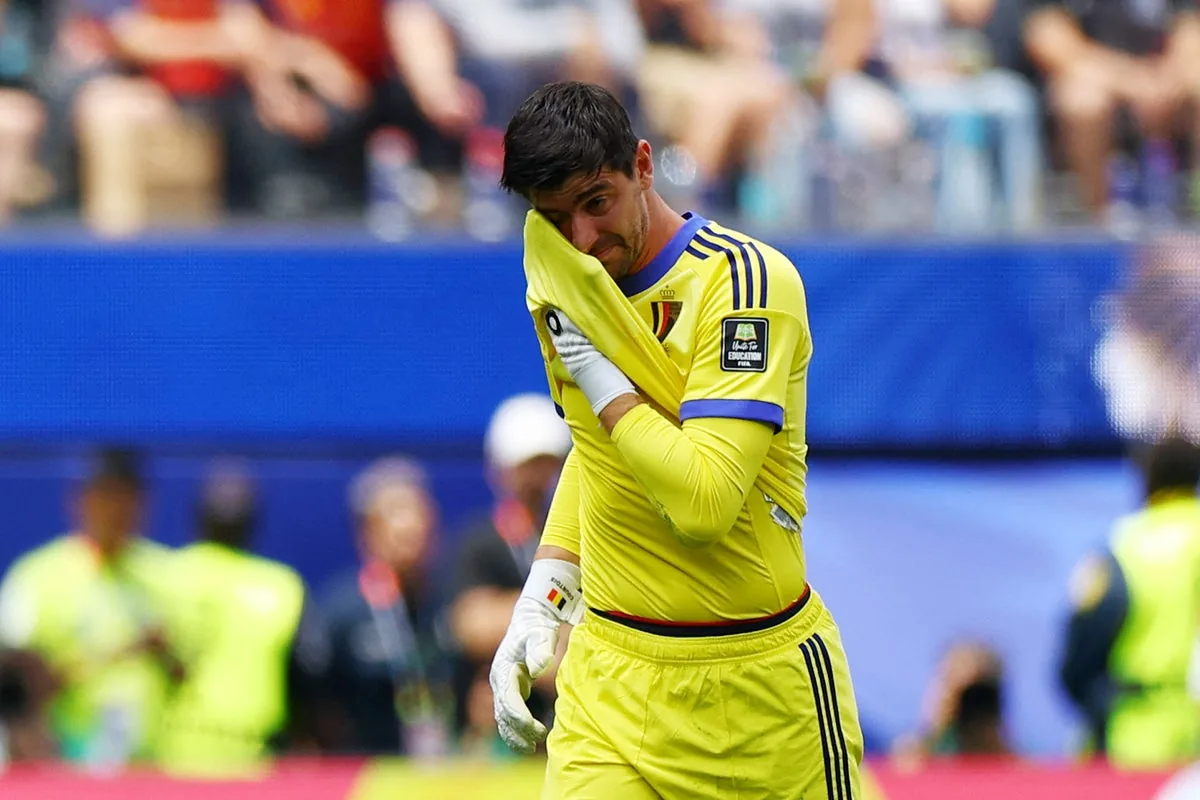
The second half brought further injury concerns for Belgium. Goalkeeper Thibaut Courtois required a 71st-minute exit after massaging his left hip following a save. Visibly emotional, Courtois was replaced by Senne Lammens. Kevin De Bruyne also struggled with his fitness, taking a seat after an 80th-minute lob and later receiving a yellow card for a challenge on Ferran Torres. Garcia used his final substitution to replace De Bruyne with Alexis Saelemaekers.
Late Drama and Tournament Conclusion
With Lammens in goal, Spain secured their winning goal. Pau Cubarsí took a shot from outside the box, which Lammens was unable to claim, spilling it back into the box. Mikel Merino was quick to react, poaching the loose ball and scoring an 88th-minute winner for Spain. Merino‘s goal was his second late decider in as many knockout games.
Danny Murphy noted that Lammens had been brought on late and that the shot was his first real action, stating that while he stopped it, he did not clear it from danger. Lammens was consoled by his teammates, while Courtois watched on. This result sends Spain to a semi-final against France.
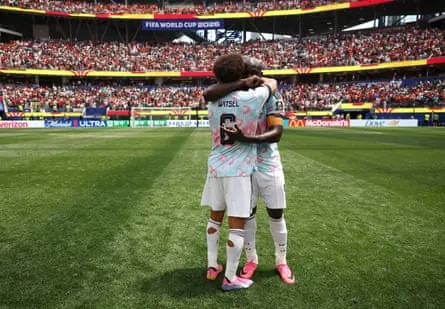
The match saw the introduction of veterans Romelu Lukaku and Axel Witsel in a triple change, joining De Ketelaere on the pitch. While Courtois may potentially feature in a future World Cup as an elder statesman, this tournament is likely the last for several members of Belgium‘s experienced generation. Despite the defeat, Garcia‘s squad displayed significant resolve, giving the European champions a stern test until the final whistle.
Read Also
Source: theguardian.com

As NewsGB's Senior Football Correspondent, Jack Ferndale reports on the Premier League, the EFL and the England national side for readers across the country. He covered north-east football for a regional daily. He holds a degree in Sports Journalism from the University of Sunderland and completed an NCTJ diploma. Jack lives in Sunderland, where he watches lower-league football home and away. “The story is in the squad, not just the starting eleven.”