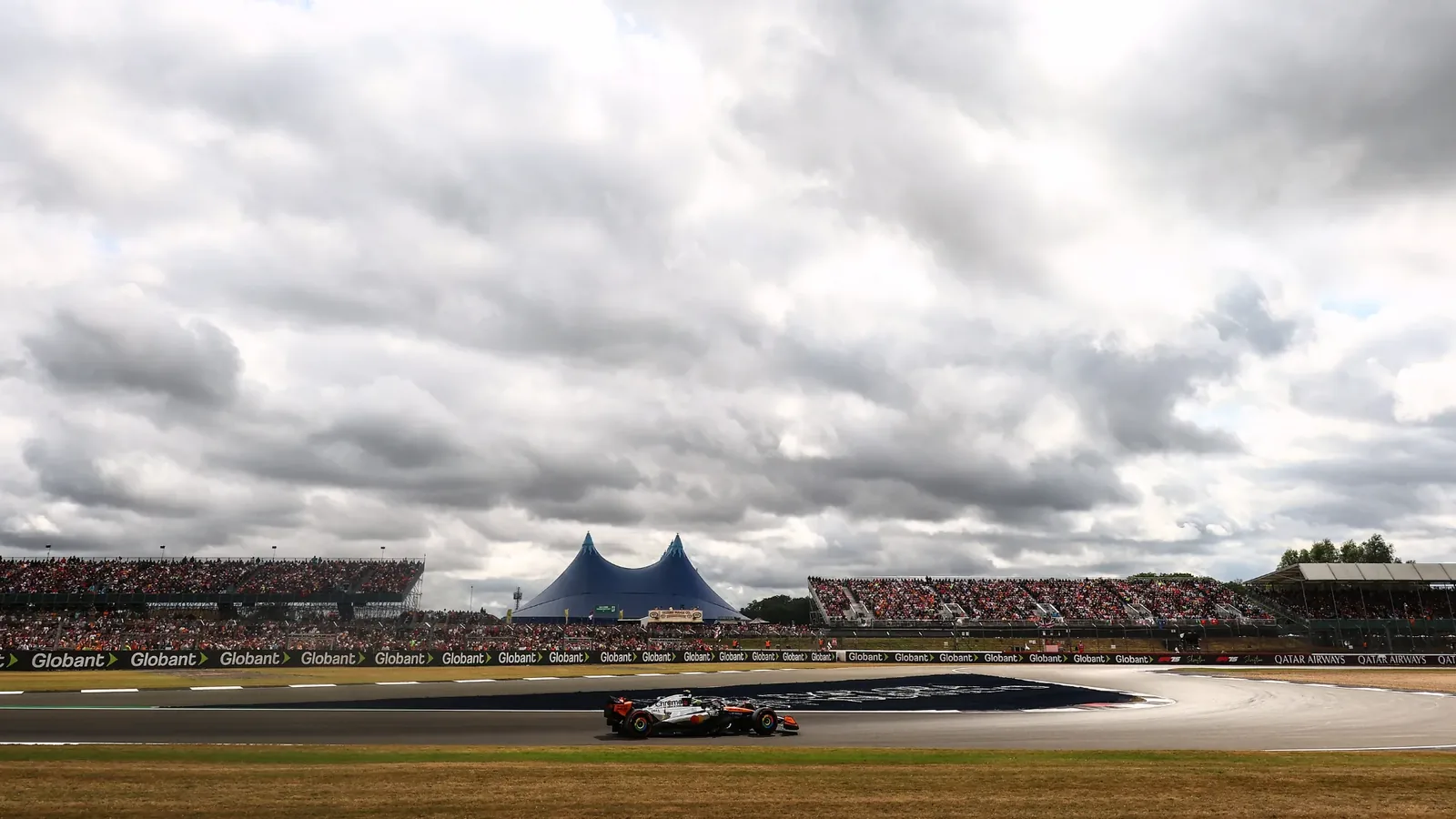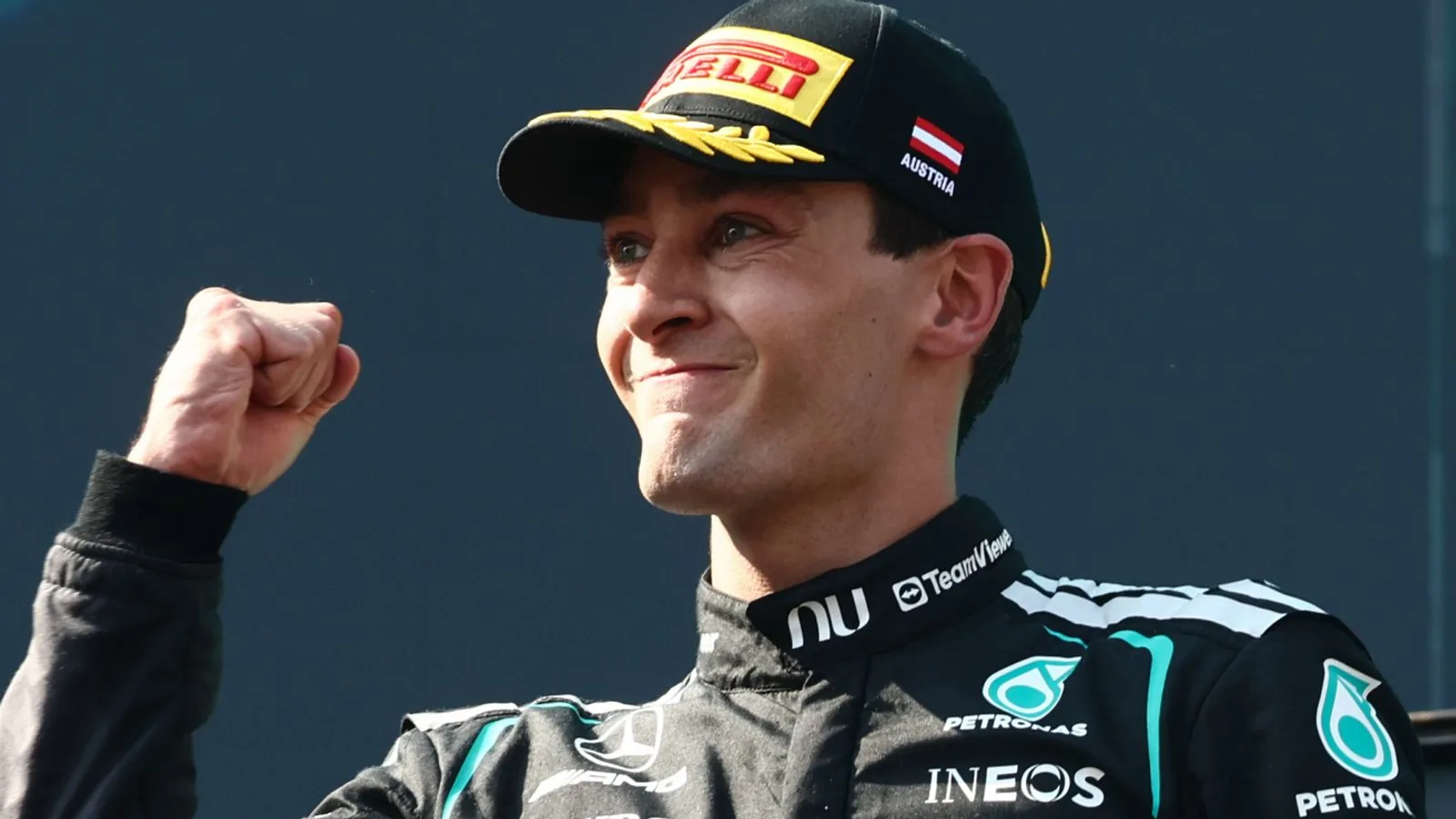

George Russell secured his second victory of the season at the Austrian Grand Prix, starting from pole position. The Mercedes driver’s win has brought him closer to his team-mate Kimi Antonelli in the drivers’ standings, reducing the gap to 40 points. Following his win, Russell admitted to experiencing a “low point” earlier in the season before improving his performance in recent races.
The pole position that set up Russell’s victory was achieved under circumstances that have drawn scrutiny. During the final part of qualifying, Max Verstappen crashed at Turn Nine, prompting marshals to wave a single yellow flag. Antonelli, believing it to be a double yellow flag, reduced his speed, which is the correct response for a double yellow. However, under a single yellow flag, drivers are not required to abandon their lap, only to avoid setting their fastest time in the affected section of the track. Russell adhered to this rule, and his subsequent lap time was sufficient for pole.
Controversy over flagging decisions
The decision to show only a single yellow flag at Turn Nine has been questioned by both Verstappen and Antonelli. Turn Nine is described as the fastest corner on the track, taken at speeds close to 140mph, with a challenging downhill entry and an exit kerb that can be easily over-run. Verstappen characterised the situation as “quite crazy,” while Antonelli expressed confusion, stating, “There was a car in the wall in a fast corner. I don’t know why it didn’t go double-yellow straight away, because it’s a super-quick corner, and if you go off at the same time, it can end up very badly. That was a bit confusing.”
Antonelli further suggested that such incidents in high-speed corners should prompt an immediate double yellow flag, differentiating them from slow-speed corners where a single yellow might be acceptable. Race control upgraded the flag to a double yellow within 20 seconds of the initial incident, but by then, all drivers had completed their laps, including Russell’s pole-winning effort. The core concern revolves around whether the appropriate flag was displayed given the severity of Verstappen’s crash.
Ferrari’s Austrian performance and strategic disagreements
Ferrari’s performance in Austria also came under review, particularly after their strong showing in Spain. Despite qualifying in second and third positions, Lewis Hamilton and Charles Leclerc finished the race in fifth and eighth places, respectively. Hamilton noted that the team’s grid positions were not truly indicative of their pace, suggesting they would likely have been fourth and fifth had Verstappen and Antonelli completed their final qualifying laps.
Hamilton also revealed a disagreement with the team regarding race strategy. While the team advised a two-stop strategy, Hamilton was convinced a three-stop approach would be better, anticipating high tyre degradation due to track temperatures in the mid-50s to 60 degrees. He preferred to start on soft tyres, but the team opted for mediums. Hamilton reflected that he might have achieved fourth place with his preferred strategy. Team boss Frederic Vasseur suggested that Ferrari might have been too focused on competing with Mercedes early in the race, leading to an overly aggressive strategy that did not suit their actual pace.
Hamilton acknowledged that while Ferrari has a good car, they are currently slower than Mercedes and need to continue development, particularly in terms of power. He emphasised that their recent win in Barcelona was an anomaly, and significant work remains to close the performance gap.
Driver market speculation and Williams’ struggles
The driver market for 2027 is currently in a state of flux, with the potential for either minimal changes or significant upheaval. The key factor influencing this market is Max Verstappen’s future. Although Verstappen is contracted to Red Bull until the end of 2028, his contract reportedly includes a performance clause that could theoretically allow him to leave if Red Bull does not meet certain conditions. However, drivers for Ferrari and McLaren are under contract beyond the current season, and George Russell has affirmed his commitment to Mercedes, where Kimi Antonelli’s position is secure.
Meanwhile, Williams faces challenges, with questions arising about the future of their drivers, Carlos Sainz and Alex Albon. The team had aimed for a significant step forward in 2026, having focused resources on this season. However, after finishing fifth in the constructors’ championship last year, they have regressed in competitiveness, currently sitting eighth. This decline has led to speculation about the satisfaction of their drivers, who were reportedly presented with a vision for the team that has not materialised.
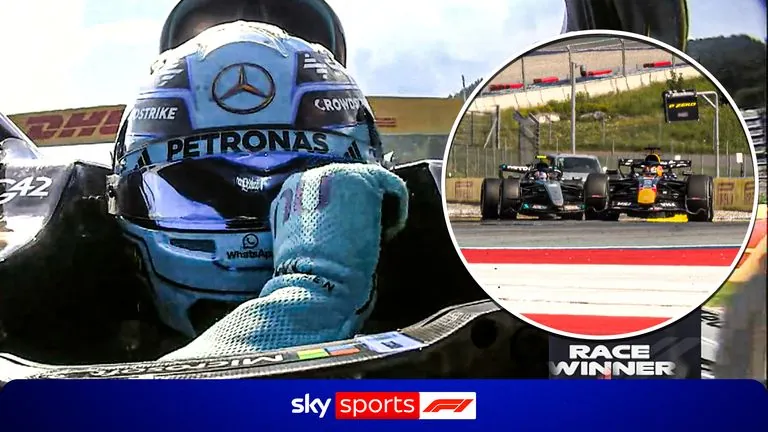
Russell’s recent upturn in form, including his victory in Austria and a second-place finish in Barcelona, follows a period he described as challenging. He noted the difficulty of consistently performing against a strong team-mate like Antonelli. Russell’s win in Austria marks his first grand prix victory since the opening round of the season, and he will now prepare for the British Grand Prix at Silverstone.
Read Also
- Ben Stokes departs as England captain, leaving a legacy of influential moments
- England captain Ben Stokes confirms international retirement, rejects return suggestions
- Everton closing in on deal for Middlesbrough midfielder Hayden Hackney
- New Zealand secures series victory as Ben Stokes concludes England career
Source: bbc.co.uk

As NewsGB's Senior Football Correspondent, Jack Ferndale reports on the Premier League, the EFL and the England national side for readers across the country. He covered north-east football for a regional daily. He holds a degree in Sports Journalism from the University of Sunderland and completed an NCTJ diploma. Jack lives in Sunderland, where he watches lower-league football home and away. “The story is in the squad, not just the starting eleven.”