
Scotland’s World Cup challenge falters in Miami
Scotland’s aspirations for advancing in the World Cup are in jeopardy following a significant defeat to Brazil in Miami. The result has left the team in a precarious position, relying on the outcomes of other matches to secure a spot in the last 32.
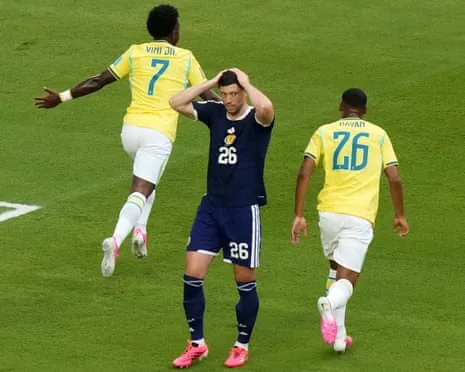
The match saw Brazil dominate early, with Vinícius Júnior scoring twice before the half-time interval. His first goal came in the seventh minute after Scott McKenna dallied on the ball, leading to a deflection that fell to Vinícius. He then rounded Angus Gunn to score. The second goal for Vinícius came from a header, capitalising on defensive lapses from Nathan Patterson and Gunn following a cross from Bruno Guimarães.
Despite some initial resistance, Scotland’s efforts to mount a comeback were largely contained. The team managed only one shot on target through Scott McTominay in the 50th minute, which was saved by Alisson. This marked their first on-target attempt since John McGinn’s deflected goal against Haiti earlier in the tournament.
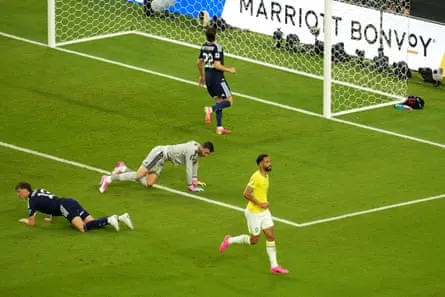
Brazil’s third goal was scored by Matheus Cunha, set up by an unselfish pass from Guimarães, who had navigated through the Scottish defence. Neymar also made an appearance with 14 minutes remaining, marking his return to international play after an absence stretching back to late 2023.
The waiting game for Scotland
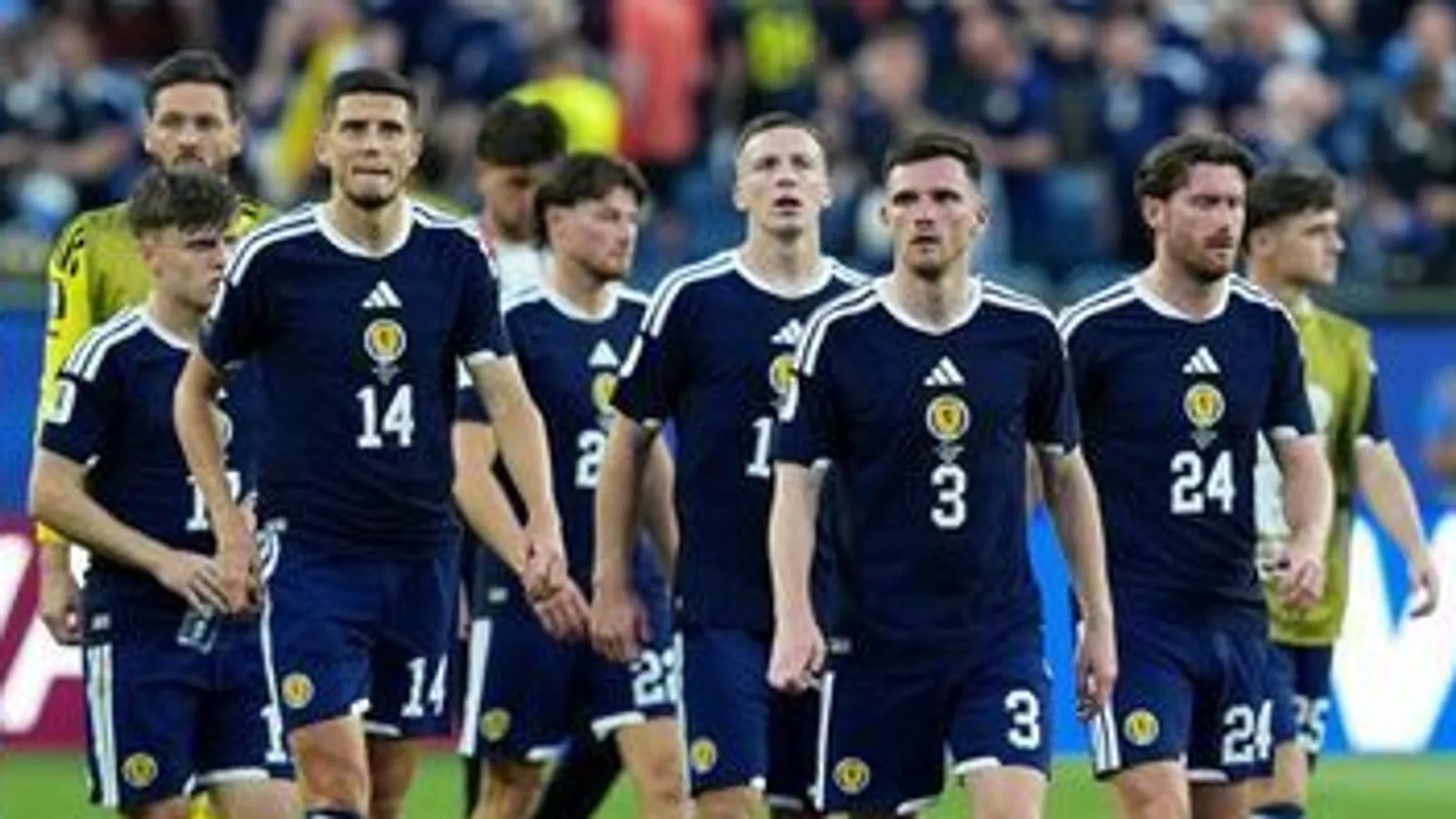
The defeat means Scotland finished their group stage campaign with three points and a goal difference of minus three. This places them among the third-placed teams, with their progression to the knockout stage now dependent on other results. Before the match against Brazil, Scotland had been in a more favourable position among the third-placed teams.
The team’s manager, Steve Clarke, acknowledged the difficult situation, stating, “I think we are going home.” Captain John McGinn added, “It’s unlikely now but we will see.” The sentiment was echoed by Andy Robertson, who expressed doubt about their chances of progressing.
The performance in Miami highlighted a lack of offensive threat from Scotland, with the team struggling to create significant opportunities. Their inability to register a shot on target for an extended period, spanning more than three hours of play across matches, underscores the challenges they faced.
The team’s defensive vulnerabilities were also evident, particularly in the build-up to Brazil’s goals. Individual errors contributed to the opposition’s advantage, allowing players like Vinícius Júnior to exploit openings. The conditions in Miami, described as stifling humidity, added to the physical demands on the players.
Impact on tournament standing and future prospects
The outcome of the match has significantly altered Scotland’s standing in the tournament. They had been sitting as the second of the best third-placed teams before the games on Wednesday, but Bosnia-Herzegovina’s victory over Qatar and Brazil’s win pushed them down the rankings. Their fate now rests on the results of other group stage matches involving teams such as Senegal, Ecuador, Curacao, Cape Verde, and Saudi Arabia.
Historically, Scotland has not had a strong record against South American opposition, having never beaten them until a recent match against Bolivia. Their record against Brazil extends to 10 attempts over 50 years without a victory. This latest encounter continued that trend.
The team is now set to return to Charlotte, North Carolina, facing an uncertain future in the tournament. While a potential match against Mexico on Tuesday has been suggested by predictors, this remains subject to the final standings of the third-placed teams. The coming days will determine whether Scotland will progress to the last 32 or exit the competition.
Vinícius Júnior’s performance was notable, as he became only the fifth Brazilian player to score in all three group stage matches in a single World Cup, joining the ranks of Jairzinho, Romario, Ronaldo, and Rivaldo. His contributions were central to Brazil’s victory and their progression as group winners.

The team’s manager, Steve Clarke, had received a four-year contract extension before the World Cup began. The focus now shifts to the remaining group stage matches and their implications for Scotland’s tournament journey.
Read Also
Source: bbc.com

Lucy Ashby is a Sports Reporter at NewsGB. She reported on the county circuit and Team GB. She focuses on tennis, cricket and athletics and is known for clear, deadline-driven reporting. She holds a degree in Sport and Media from Durham University and completed an NCTJ diploma. Now based in Durham, she plays club cricket and follows distance running. “The best sport reporting starts by listening.”