
The recent elimination of South Korea from the 2026 World Cup has led to significant turmoil within the nation’s football community, culminating in the resignation of head coach Hong Myung-bo. This departure occurred just hours after the team’s exit was confirmed, prompting widespread criticism and calls for reform within the sport’s administration.
Hong, who also led the team during their group-stage exit at the 2014 World Cup, expressed regret, stating he was “genuinely very sorry.” His resignation was closely followed by remarks from President Lee Jae-myung, who voiced “utter bewilderment at the unexpected outcome” and attributed the early exit to a “failure of organisation and personnel.” The president’s statement, posted on social media, criticised the prioritisation of favouritism over competence in leadership appointments.
The sentiment was echoed by former Manchester United star Park Ji-sung, who described the situation as “miserable.” The public reaction has been intense, with reports of threats against the coach and the need to keep player and staff arrival locations secret upon their return to South Korea. This anger is not solely due to the recent tournament performance but has been building over time.
Tournament Performance and Public Reaction
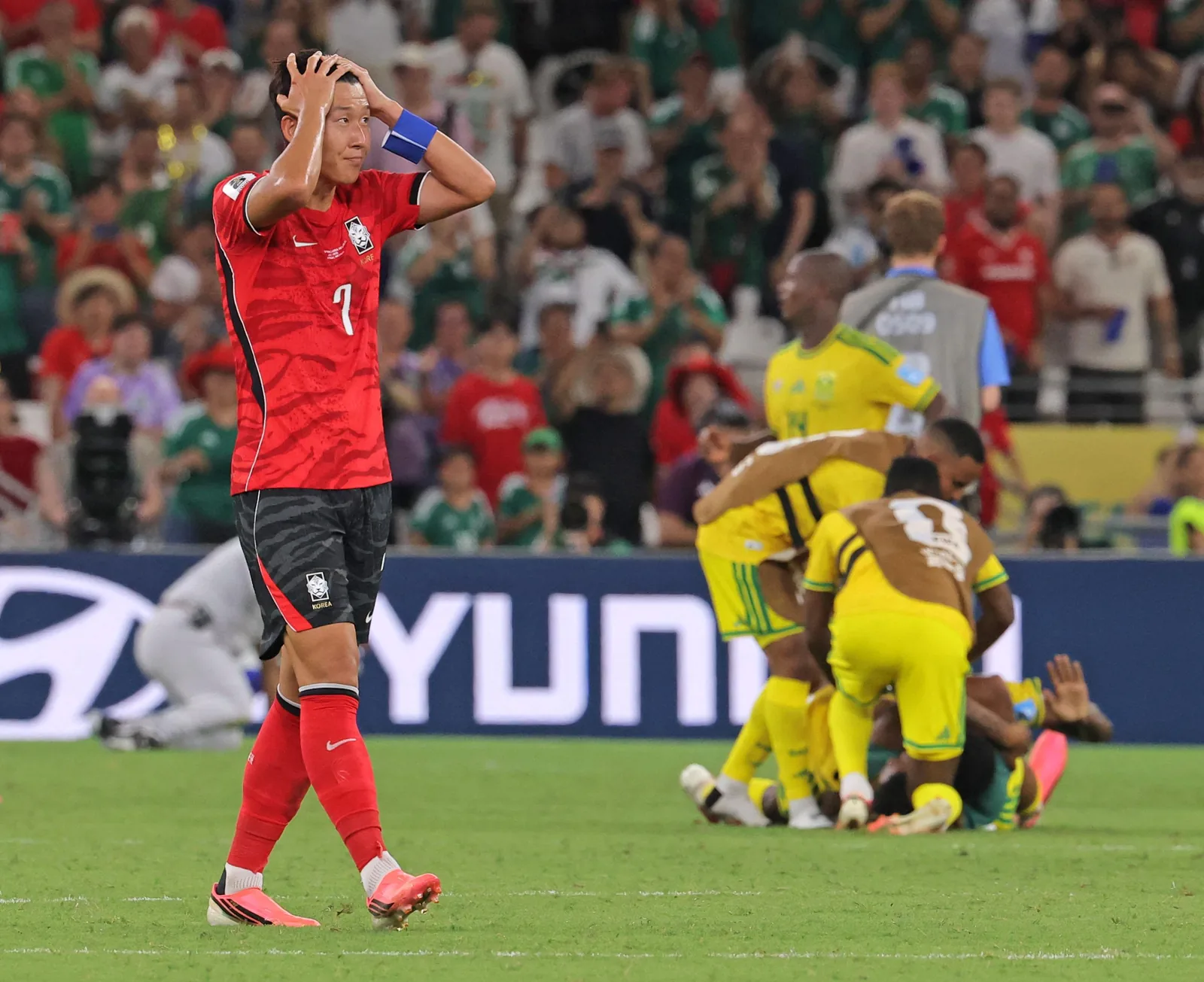
South Korea‘s campaign in Group A began with a promising 2-1 victory against the Czech Republic. However, subsequent losses, including a 1-0 defeat to Mexico and another 1-0 loss to South Africa, sealed their fate. The team, featuring prominent players such as Son Heung-min, Lee Kang-in of Paris St-Germain, and Bayern Munich‘s Kim Min-jae, needed only a point against South Africa to secure progression.
During the crucial match against South Africa, Hong made the decision to bench captain Son Heung-min, a move that drew considerable scrutiny after the team’s defeat. Former Tottenham Hotspur defender Lee Young-pyo publicly described the performance as “the worst match by a Korean football team in the 21st century.” The team then endured a three-day wait to learn if they would advance as one of the best third-placed teams, ultimately confirming their elimination.
The team’s training camp was reportedly not a harmonious environment, with media personnel overheard mocking Son’s military exemption earlier in June. This incident led to players boycotting domestic media duties for several days. Son, who turns 34 in July, may consider his international career following this disappointment. A planned welcome ceremony at Incheon International Airport was cancelled, though public ire has largely focused on the governance of the sport rather than the players themselves.
Calls for Reform and Administrative Scrutiny
The criticism extends to the leadership of the Korea Football Association (KFA), particularly its president, Chung Mong-gyu, who has held the position since 2013. Chung faced scrutiny for hiring Hong in July 2024, bypassing standard procedures, similar to his earlier appointment of Jurgen Klinsmann. These decisions led to questions regarding the fairness and transparency of the KFA’s hiring processes.
Public dissatisfaction with Hong’s appointment was evident from his first game in charge against Palestine in Seoul in September 2024, where he was booed. The Ministry of Sports conducted an investigation into the KFA in November 2024, recommending the suspension of Chung and other officials. However, the KFA secured a court injunction, allowing Chung to run for and win a fourth term in February 2025.
Chung, a member of the family that owns Hyundai, a conglomerate with historical ties to the KFA, announced in May that he would step down after the World Cup. He acknowledged the controversies and criticisms during his tenure, attributing them to his own shortcomings. Political parties have also weighed in, with representatives from the Democratic Party of Korea (DPK) and the People Power Party (PPP) calling for a parliamentary probe into the KFA’s operations. Lawmakers, including Rep. Park Beo-kye and Rep. Song Young-gil of the DPK, and Rep. Kim Seung-su of the PPP, have demanded a thorough review and accountability from the KFA, highlighting the need for significant structural changes within Korean football.
Contrasting Fortunes with Japan and Future Outlook
The current state of South Korean football is often contrasted with the structured approach seen in Japan. While South Korea has historically been a dominant force in Asian football, with 11 consecutive World Cup appearances, there is a perception that they have fallen behind their regional rival. The K League, established in 1983 as Asia’s first professional league, once outpaced Japan’s J League, which began a decade later.
Recent results underscore this shift. In October, Brazil defeated South Korea 5-0 in Seoul, while days later, Japan lost 3-2 to Brazil in Tokyo. In March, South Korea suffered a 4-0 loss to Ivory Coast, whereas Japan became the first Asian team to beat England, securing a 1-0 victory at Wembley. Clubs in the J League are now reportedly outperforming their K League counterparts in Asian competitions and are exporting more talent to Europe, with the Japanese national team now exclusively comprising European-based players.
With no coach, an outgoing federation president, and a strong desire for change, the current crisis presents a potential turning point for South Korean football. The pain of the 2026 World Cup exit could serve as a catalyst for significant reforms within the sport’s administration and development.
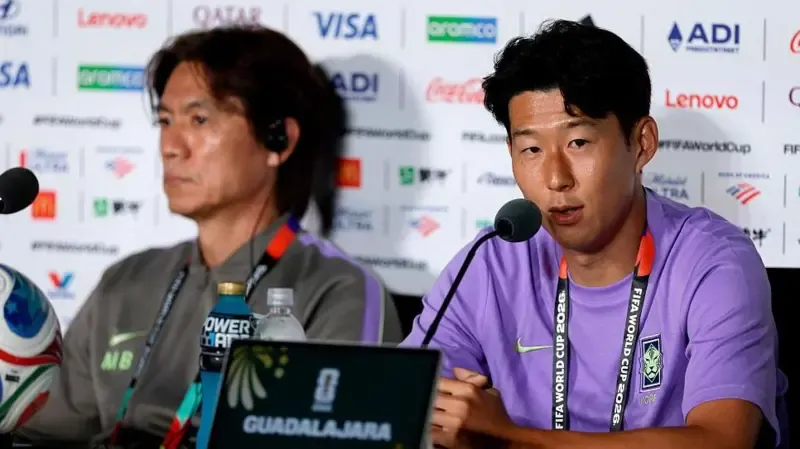
The KFA and its leadership have been under intense scrutiny, with calls for an overhaul to address the issues that have contributed to the team’s recent performance. The Ministry of Culture, Sports and Tourism has been asked to investigate the causes of the problem and propose preventative measures.
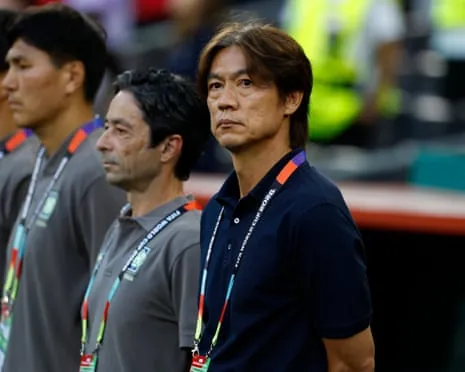
The political pressure for reform underscores the national importance placed on football and the desire to restore public trust in its administration. The focus remains on ensuring that competence and transparency guide future decisions within Korean football.
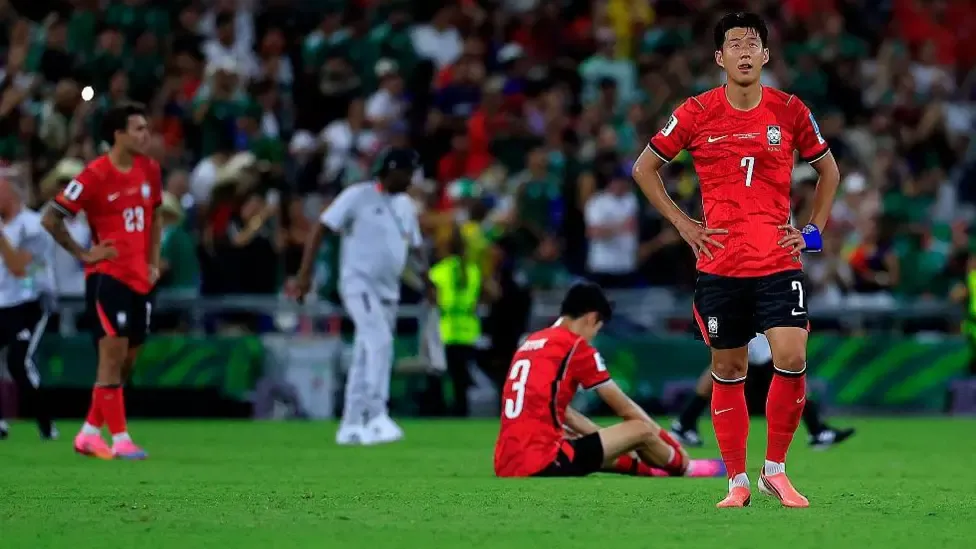
The resignation of Hong Myung-bo on Sunday marks a significant moment in this ongoing crisis.
Read Also
Source: bbc.co.uk

Dominic Hayes is the Sports News Writer at NewsGB, covering rugby union, golf and boxing with five years of reporting experience. He started on a north-east sports desk. He holds a degree in Journalism from Teesside University and completed an NCTJ diploma. Based in Middlesbrough, he follows pro golf and amateur boxing. “Fast and accurate is the only standard worth keeping.”