
Spain’s Triumph and Celebrations in Madrid
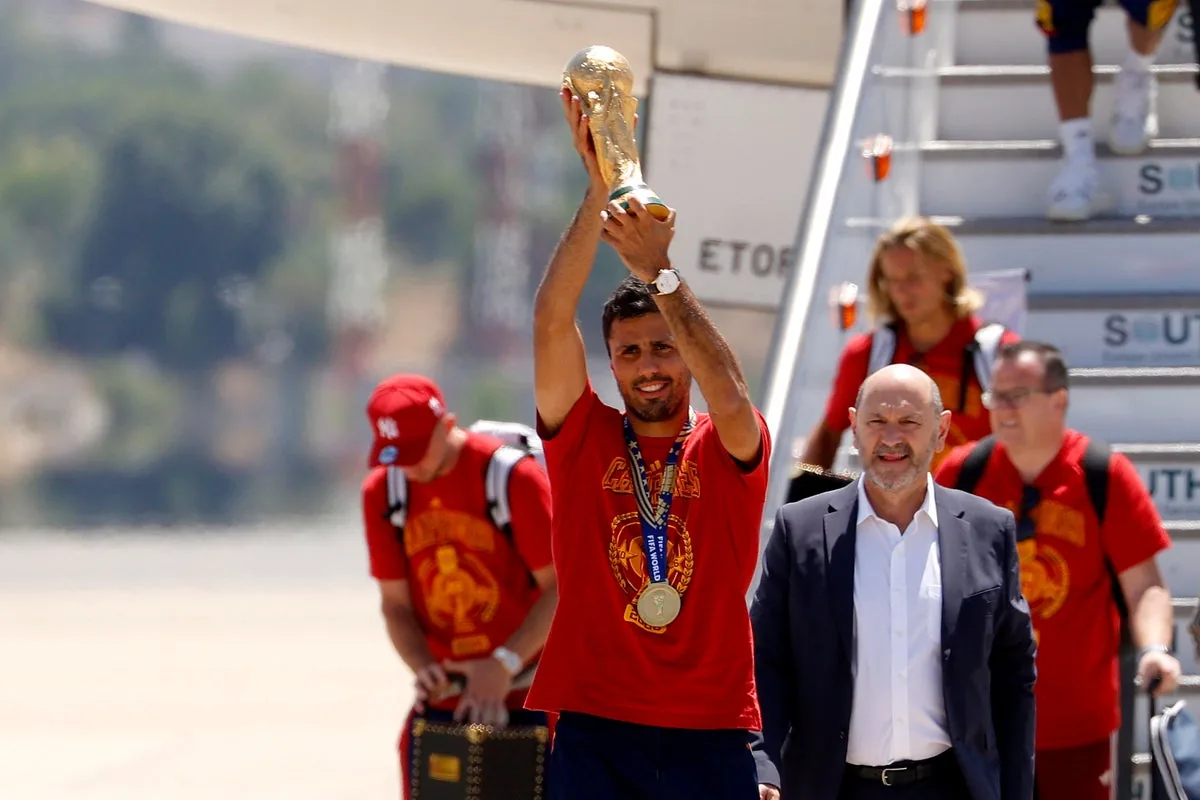
Spain‘s national team has returned to Madrid to celebrate their World Cup victory with a trophy parade through the capital’s streets. The team secured their second men’s World Cup triumph after Ferran Torres scored the decisive goal. The celebrations in Madrid are marked by a festival-like atmosphere, with an open-top bus carrying the team through iconic locations.
The parade route began at the Arco de Moncloa, proceeding down the historic Calle de la Princesa, and then turning onto Calle de Alberto Aguilera. The bus continued along a significant stretch, passing through Calle de Carranza, Calle de Sagasta, Calle de Genova, and Calle de Goya, which took it past emblematic landmarks such as the Monument to Christopher Colombus. The finale of the parade involved turning onto Calle de Serrano, passing the Puerta de Alcala, and then onto Calle de Montalban, culminating at the Cibeles Palace, the main venue for the celebrations.
Prior to the public parade, the world champions received a royal welcome from King Felipe VI and his family. At the finishing point near Cibeles Palace, a large stage hosted entertainment for the fans, with DJs playing music for the crowd. The area was filled with supporters dressed in red and yellow, many braving the heat with colour-coded umbrellas.
The entertainment line-up for the main stage at the parade included several Spanish artists: Barce, Alex Martini, Pawly, Arde Bogota, Ana Mena, Lola Indigo, Viva Suecia, Aitana, and Saiko. The atmosphere was described as lively, with fans singing along to both English and Spanish songs.
Argentina’s Disappointment and FIFA Investigation
In contrast to Spain‘s celebrations, Argentina returned home following a defeat marred by post-match incidents. FIFA is set to investigate the chaotic scenes that occurred after the final whistle in New Jersey. The governing body will analyse referee reports and footage to determine if additional disciplinary action is warranted.
Among the incidents under investigation is the red card issued to Leandro Paredes, who was dismissed for violent conduct after appearing to strike Eric Garcia. Additionally, Nahuel Molina was seen throwing a punch towards Rodri, and Argentina‘s assistant coach, Roberto Ayala, was involved in a confrontation with Dani Olmo.
Lionel Messi, at 39 years old, expressed his deep pain following the 1-0 loss to Spain, stating that the wound would take time to heal. This marks Messi‘s second World Cup final defeat, having also lost to Germany in 2014. Despite the loss, Messi reflected on the positive aspects of Argentina‘s campaign, including their ability to unite the country and reach two consecutive World Cup finals.
Messi played a crucial role in Argentina‘s journey to the final, contributing eight goals and four assists. He was instrumental in their comeback victories against Egypt and England in the knockout stages. However, Argentina could not overcome a Spain side that conceded only one goal throughout the entire tournament. The final match itself was described as a dire spectacle for 90 minutes, with Spain finally breaking the deadlock in the second half of extra time.
Key Moments of the Final Match
The final match in New York saw both teams start evenly. Lamine Yamal had an early opportunity for Spain, but his shot was deflected. Unai Simon was quick to deny Lionel Messi a scoring chance for Argentina. Towards the end of the first half, Mikel Oyarzabal had a shot for Spain that was saved by Emiliano Martínez.
After a protracted half-time show, Spain continued to dominate possession in the second half but struggled to break through Argentina‘s defence. Substitute Ferran Torres came close with a header that was caught by Martínez. Following the introduction of Mikel Merino, Spain continued to press, with Pau Cabarsi testing the goalkeeper from distance. As the match entered stoppage time, Chelsea‘s Enzo Fernández received a second yellow card for a foul on Cubarsi, reducing Argentina to 10 players.
Argentina, having not registered a shot in the first 90 minutes, retreated further after the red card. Spain thought they had scored when Merino‘s shot led to Nico Williams finding the net, but the goal was disallowed due to a foul by Merino on Nicolas Otamendi. Martin Zubimendi was then introduced for Rodri midway through the first half of extra time, and Merino went close again with a header that went just wide.
The deadlock was finally broken just over a minute into the second half of extra time, with Ferran Torres scoring from Williams‘ knockdown. Argentina sought an equaliser, but Messi‘s volley was blocked by Merino, who received treatment for his efforts. Spain held on to secure their second World Cup crown. Mikel Merino and Martin Zubimendi, along with David Raya, were among the players who added their names to the list of those who have won the World Cup.
Read Also
Source: independent.co.uk

As NewsGB's Senior Football Correspondent, Jack Ferndale reports on the Premier League, the EFL and the England national side for readers across the country. He covered north-east football for a regional daily. He holds a degree in Sports Journalism from the University of Sunderland and completed an NCTJ diploma. Jack lives in Sunderland, where he watches lower-league football home and away. “The story is in the squad, not just the starting eleven.”