
The 2026 World Cup, hosted across the United States, Mexico, and Canada, has concluded, prompting an early assessment of its historical standing. The tournament was characterised by significant spectacle, alongside notable controversies and compromises.
Gianni Infantino, the president, had described the event as potentially the “biggest event in the history of mankind,” likening it to 104 Super Bowls in one month. This edition was the first to feature 48 teams, with nations such as Curacao, Cape Verde, Jordan, and Uzbekistan making their debut appearances. The expansion led to a group stage that offered compelling storylines and colour, particularly from the debutant teams.
Tournament Expansion and Debutant Success
The expansion to 48 teams provided opportunities for smaller nations to shine. Cape Verde, an archipelago with a population of 530,000, achieved draws against Spain and Uruguay, securing a second-place finish in their group. They later took Argentina to extra time in the knockout rounds. This performance meant Cape Verde avoided defeat in 90 minutes against both World Cup finalists. Curacao also earned a point against Ecuador after a substantial loss to Germany, and DR Congo drew with Portugal to advance from their group.
The group stage involved many matches, yet only 16 teams were eliminated during this phase. This was partly influenced by the use of head-to-head records over goal difference as the primary tie-breaker, and the progression of eight third-placed teams. The drama of the tournament largely unfolded in the knockout rounds.
Controversies and Organisational Challenges
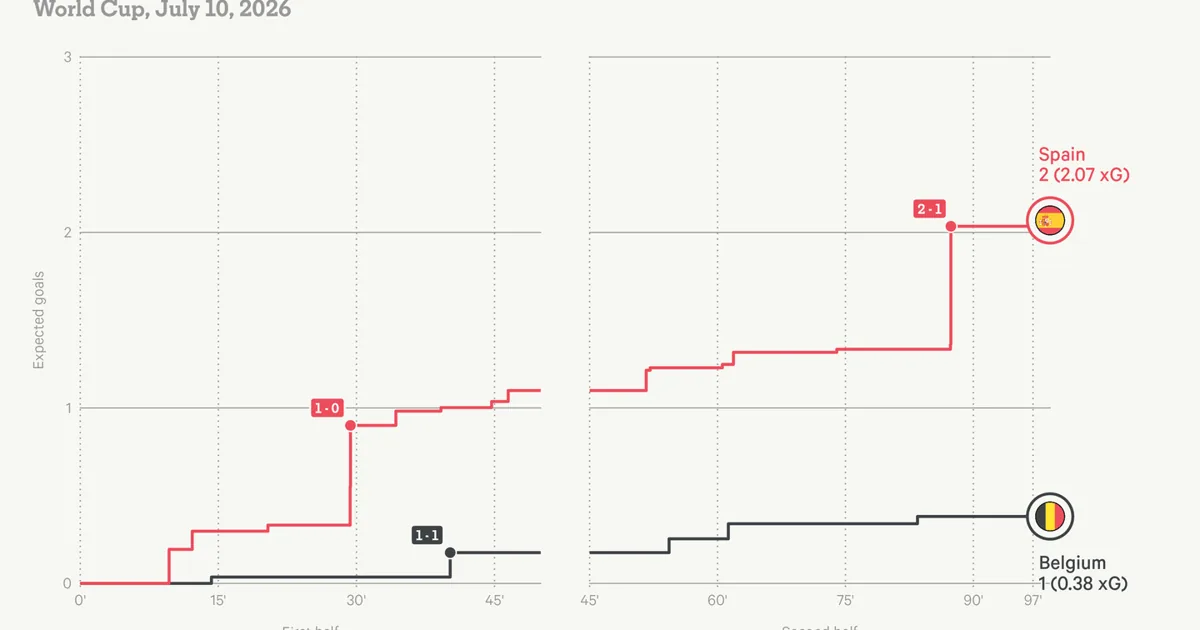
Several controversies marked the tournament, including the “Balogun Affair.” This involved political pressure to overturn a red card for Folarin Balogun, allowing him to play against Belgium despite a previous suspension. This decision, unprecedented at a World Cup, raised questions about political interference. Belgium subsequently defeated the co-hosts 4-1.
Ticket prices were a significant point of contention, with an Italian newspaper, la Gazzetta dello Sport, describing the World Cup as a “disaster” due to issues like ticket costs, the Balogun situation, weather conditions, increased game numbers, and reduced rest periods. Despite the high prices, stadiums reportedly operated at near-full capacity, with a record 6,527,410 fans attending matches. However, Fifa faced subpoenas regarding ticket pricing and the accuracy of seat locations. Initial bans on bringing water bottles into grounds were reversed after public backlash, and the high cost of transportation in host cities like New Jersey and Boston also saw reductions.
The treatment of Iran was also highlighted as scandalous, with the team allowed into the host country for only 24 hours around each of their three fixtures due to US immigration policies. The overall attitude towards the media was described as contemptuous, with some venues providing poor basic organisation and facilities.
New Rules and Seeding Policies
Pierluigi Collina, Fifa’s head of referees, implemented new laws aimed at improving game tempo by reducing time-wasting. These measures included encouraging quicker throw-ins, goal-kicks, and substitutions, and addressing players feigning injuries. While the 2022 World Cup had an average match length of 101 minutes 22 seconds with a ball-in-play time of 58 minutes three seconds, this tournament saw a ball-in-play time of 58 minutes 15 seconds. This resulted in the game being played for 60.4% of the match length, compared to 57.4% in 2022.
Mandatory three-minute hydration breaks were introduced in every match, regardless of conditions, which allowed broadcasters to air commercials. These breaks also served as tactical timeouts for coaches. While Uefa has ruled out their use in European leagues, their return for future World Cups is anticipated.
A new seeding policy was implemented to prevent top-ranked teams from meeting early in the knockout stages. Argentina, England, France, and Spain were given special status to be drawn into separate quarters. To ensure Argentina and Spain could not meet before the final, Fifa swapped Argentina into Group J and France into Group I. This adjustment meant an Argentina-Spain final, which would not have been possible otherwise, could occur.
Match Quality and Final Outcome
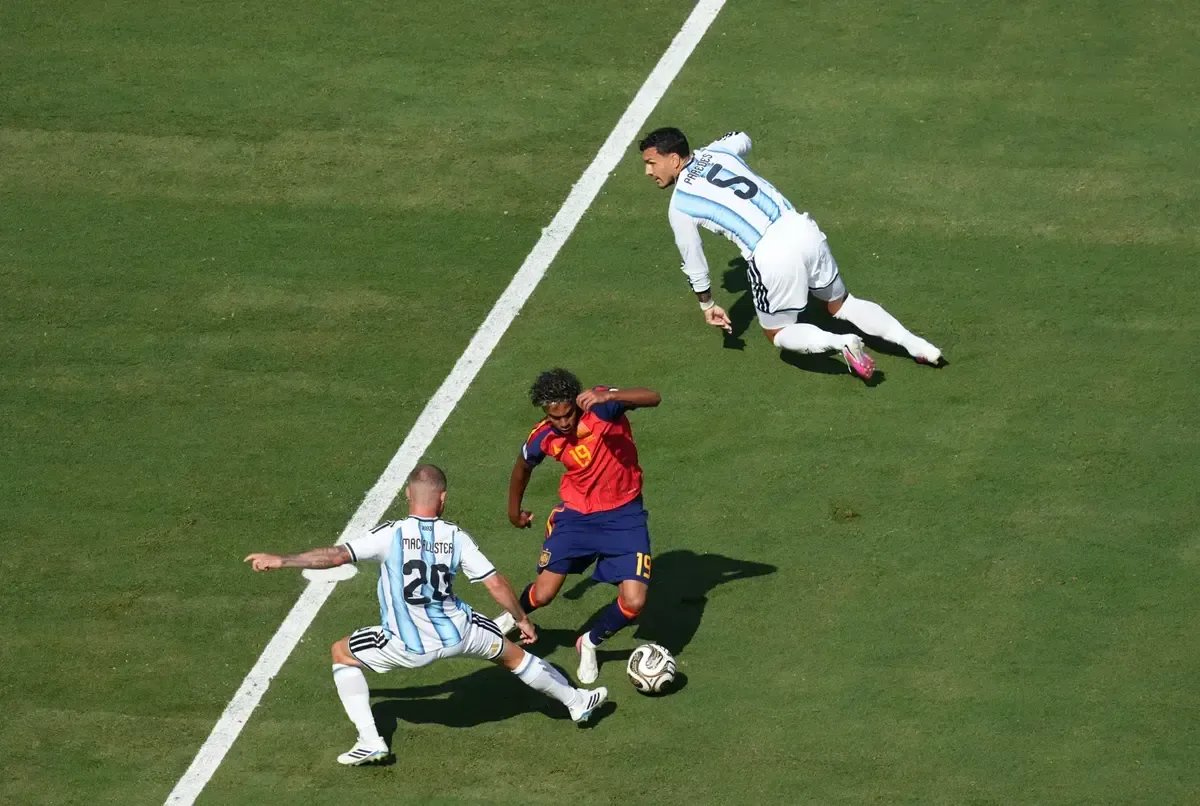
The quality of football was described as good, though not exceptional. Several dramatic games occurred in the last 32 or last 16, including Brazil v Japan, Morocco v the Netherlands, England v Mexico, Argentina v Cape Verde, Norway v Côte d’Ivoire, Belgium v Senegal, Norway v Brazil, and Argentina v Egypt. The quarter-finals were less inspiring. Argentina’s semi-final victory over England was thrilling, featuring a notable collapse, while Spain’s win over France was relatively straightforward.
The final match itself was described as dismal. While the right team won, the overall spectacle was considered a direct consequence of earlier indulgences shown to Argentina in the tournament. This conclusion positions the tournament behind the 2022 and 2018 editions, and significantly behind the 1980s World Cups or 1998, with its historical ranking likely to be somewhere between 2014 and 2006.
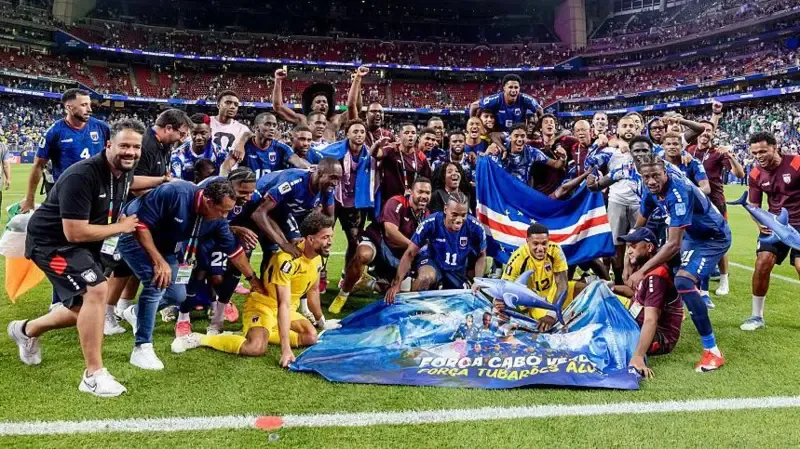
The 2026 World Cup featured 48 teams for the first time, with Cape Verde achieving draws against Spain and Uruguay in the group stage.
Read Also
Source: theguardian.com

As NewsGB's Senior Football Correspondent, Jack Ferndale reports on the Premier League, the EFL and the England national side for readers across the country. He covered north-east football for a regional daily. He holds a degree in Sports Journalism from the University of Sunderland and completed an NCTJ diploma. Jack lives in Sunderland, where he watches lower-league football home and away. “The story is in the squad, not just the starting eleven.”