
England’s World Cup Exit and Managerial Future
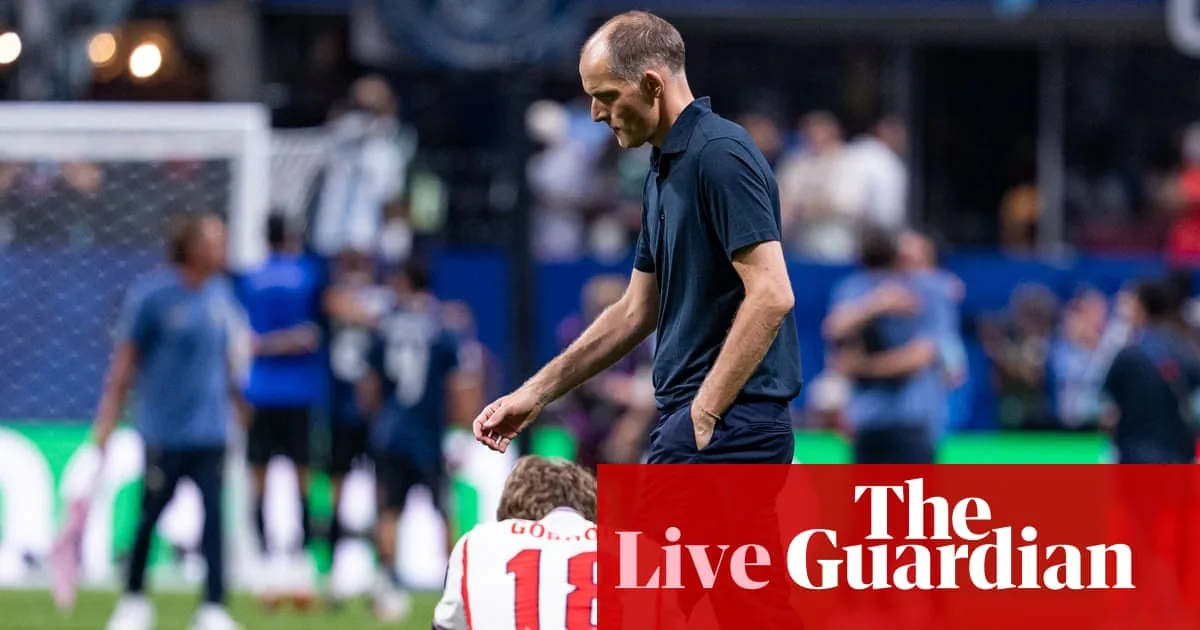
England‘s journey in the World Cup 2026 concluded with a 2-1 defeat to Argentina in the semi-finals. This result meant the men’s team missed out on a final appearance. Despite the loss, head coach Thomas Tuchel has the continued support of the Football Association (FA) and is anticipated to lead the team into Euro 2028.
Mark Bullingham, the FA chief executive, expressed that the players and Tuchel gave their utmost effort, acknowledging the hard work of the squad, coaches, and staff throughout the tournament. Tuchel himself stated his intention to continue with his contract until the home Euros, though he admitted it was difficult to look that far ahead immediately after the defeat. He signed a two-year contract extension in February, having been appointed in January 2025 with an initial mission to win the World Cup.
The Euro 2028 tournament is set to be hosted by England, Wales, Scotland, and the Republic of Ireland. England is scheduled to play France in the bronze-medal match on Saturday. A victory in this match would mark their best performance in a men’s World Cup since 1966.
Tactical Decisions Under Scrutiny
Tuchel’s tactical choices during the semi-final have drawn criticism. England initially took the lead in the second half through Anthony Gordon. However, a more defensive approach thereafter saw Argentina score twice, with Enzo Fernández equalising in the 85th minute and Lautaro Martínez securing the winner in stoppage time.
Former England forward Gary Lineker described Tuchel’s tactics as “unfathomable,” particularly the decision to play deep against Lionel Messi, who set up both of Argentina‘s goals. Lineker noted that Messi had considerable space to deliver balls into the box. Former midfielder Joe Cole also pointed to a negative mentality, suggesting that a fear of failure might paralyse England teams in crucial moments, citing a low possession percentage after England scored.
Tuchel made several defensive substitutions, bringing on Ezri Konsa, Nico O’Reilly, and Dan Burn. While some critics argue that more attacking substitutions might have been beneficial, others acknowledge that such a move could have also led to criticism if England had conceded. Tuchel stated that he did not feel offensive substitutions would help and that the team became passive despite staying in a 4-4-2 formation.
Controversy Surrounding Argentina’s Post-Match Celebration
Following their victory, Argentina‘s players were criticised for waving a banner supporting their country’s claims to the Falkland Islands. The banner, which read “Las Malvinas son Argentinas” (“The Falkland Islands are Argentinian”), was held up by players as they celebrated their win against England in Atlanta.
Senior minister Peter Kyle described the players’ actions as “entirely inappropriate,” emphasising that politics should be separate from football. He stated that the matter would be referred to Fifa, which has rules against political messaging on the pitch. Kyle expects Fifa to conduct a thorough investigation into what he called an “egregious violation” of these rules.
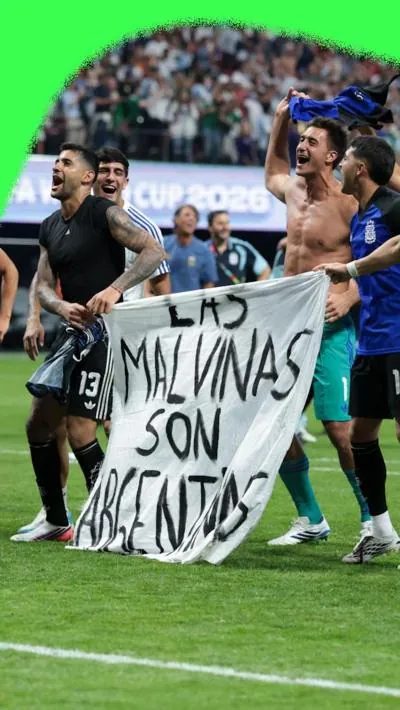
Political tensions between Argentina and Great Britain regarding the Falkland Islands have a history, including a conflict in 1982. Before the match, Argentina boss Lionel Scaloni had expressed a desire for the fixture not to become about the territorial dispute. However, Argentina‘s vice-president Victoria Villarruel had referred to England as “invaders” and “usurping pirates” in the lead-up to the game and posted a victory message on X after the match, including a video of what appeared to be Argentinian soldiers.
The match itself saw Argentina score twice in the final moments, erasing England‘s lead and advancing to the final. Argentina‘s second goal, scored by Lautaro Martínez, came in second-half stoppage time.
Read Also
Source: theguardian.com

Dominic Hayes is the Sports News Writer at NewsGB, covering rugby union, golf and boxing with five years of reporting experience. He started on a north-east sports desk. He holds a degree in Journalism from Teesside University and completed an NCTJ diploma. Based in Middlesbrough, he follows pro golf and amateur boxing. “Fast and accurate is the only standard worth keeping.”