
Fery’s Wimbledon journey and medical challenges
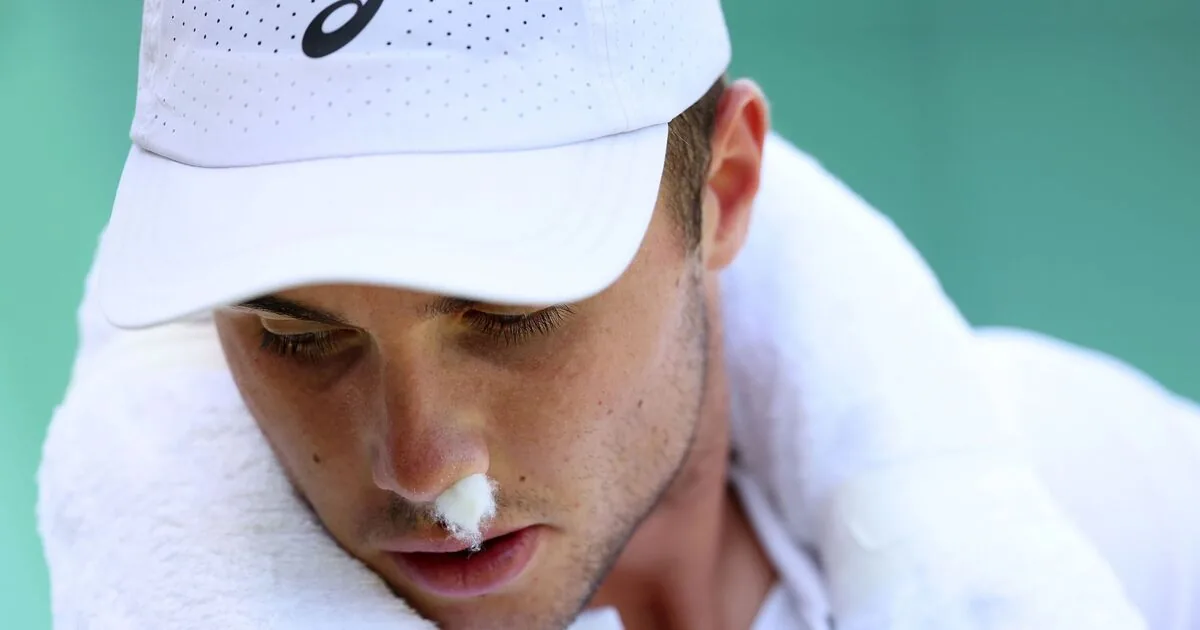
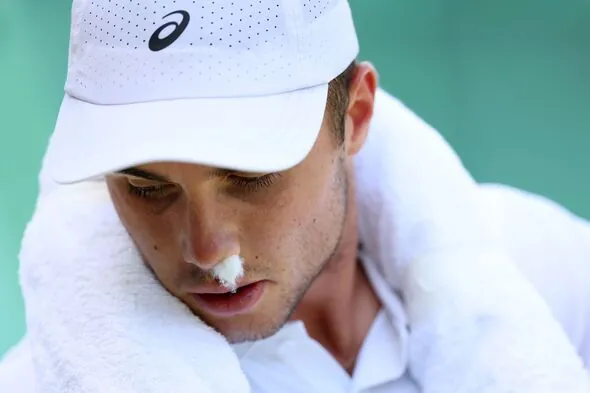
British wildcard Arthur Fery has undergone a medical procedure during his Wimbledon campaign to address recurring nosebleeds. The issue has been a notable aspect of his performance throughout the tournament, particularly during the grass-court season.
The 23-year-old, whose world ranking is No. 114, has experienced nosebleeds that he attributed to potential stress or nerves. This condition has been a consistent challenge for him, especially during the demanding matches of the competition.
During his five-set victory against Zizou Bergs, Fery required medical attention three times for nosebleeds. This included an instance while he was serving to remain in the match. The frequent interruptions had the potential to disrupt his rhythm and affect his opponents.
The problem is not a regular occurrence for Fery but has affected him throughout the competition. Environmental factors such as elevated pollen levels and arid summer conditions during the grass-court season can dry out and inflame nasal membranes. Additionally, the intense cardiovascular demands of extended tennis matches can elevate blood pressure, making fragile, dehydrated blood vessels in the nose more prone to rupturing.
Despite these challenges, Fery’s performance has exceeded expectations. He did not experience any nosebleeds during his five-hour, five-set match against Grigor Dimitrov on Centre Court, nor during his quarter-final win against No.9 seed Flavio Cobolli.
The procedure and its impact
Fery’s team had initially planned for him to consult doctors after the tournament. However, given his unexpected progress, he opted to take action before his Centre Court debut earlier in the week.
Speaking after his straight-sets win over Cobolli, Fery confirmed that he had a minor procedure four days prior. The procedure involved cauterising blood vessels in his nose, a process where broken blood vessels are lightly burned to seal them and prevent further bleeding. He described it as a small and non-painful intervention.
In addition to the medical procedure, Fery has also adjusted his habits, trying to avoid wiping his nose directly with a towel, which he believed was not helping the situation. He attributed his improved condition to a combination of these actions and some luck.
With the nosebleed issue seemingly under control, Fery now faces a significant challenge in his upcoming match against French Open champion Alexander Zverev. Zverev, who stands at 6ft 6in, is considerably taller than Fery.
Fery expressed confidence in his ability to compete against powerful servers, stating that he has improved in this area. He noted his acceptance of being aced frequently and his focus on applying pressure during his own service games, highlighting his returning ability.
Looking ahead to the semi-final
Alexander Zverev has acknowledged Fery’s talent, recalling first seeing him play during his run as a qualifier at the Australian Open. Zverev was impressed by Fery’s clean technique and groundstrokes, even then.
While Zverev noted that Fery’s presence in the semi-finals might be a surprise to some, he believes it is well-deserved. He praised Fery’s victories and his fighting spirit in several matches, calling his journey a great story.
Fery has already made history by becoming the first British male wildcard to reach the quarter-finals at Wimbledon since Andrew Foster in 1993. This achievement marks a significant milestone, underscoring the extraordinary nature of an unseeded home player advancing so far into the tournament’s second week.
His impressive run has also seen his live ranking climb to world No. 63, securing his entry into the forthcoming US Open without needing to qualify. Fery’s quarter-final match against Flavio Cobolli was scheduled to begin at 14:40 on Centre Court.
Read Also
Source: express.co.uk

Lucy Ashby is a Sports Reporter at NewsGB. She reported on the county circuit and Team GB. She focuses on tennis, cricket and athletics and is known for clear, deadline-driven reporting. She holds a degree in Sport and Media from Durham University and completed an NCTJ diploma. Now based in Durham, she plays club cricket and follows distance running. “The best sport reporting starts by listening.”